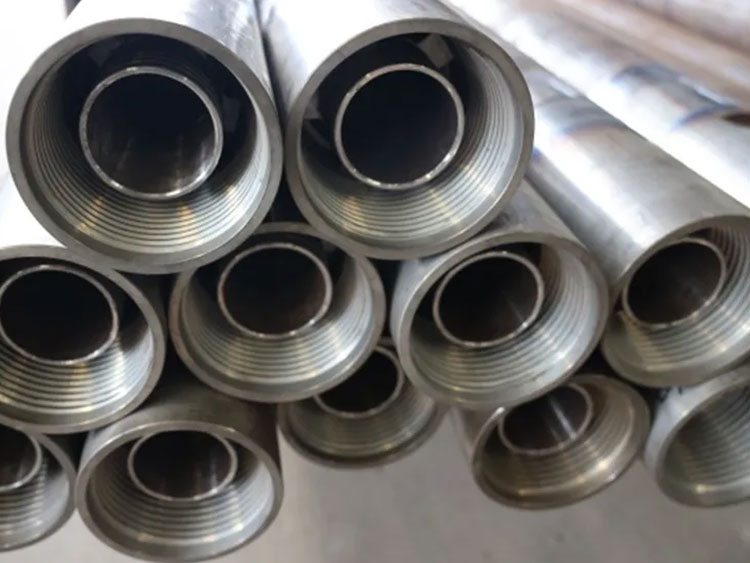
RC drilling (Reverse Circulation drilling) is a widely used exploration drilling method that uses dual-wall drill pipes and compressed air to collect high-quality rock samples efficiently. The RC drilling method is especially popular in mineral exploration because it provides fast drilling speed, reliable sample recovery, and cost-effective performance in challenging geological conditions.
Compared with conventional drilling techniques, reverse circulation drilling uses an inner tube to transport rock cuttings directly to the surface, reducing contamination and improving sample quality. It is commonly applied in mining exploration, resource evaluation, and geological investigation projects.
Weilida Drill provides professional drilling solutions, including reverse circulation drill pipe products designed for efficient RC drilling operations in mining and exploration applications.
What Is RC Drilling? Definition and Basic Working Principle
RC drilling is a reverse circulation drilling technique that uses a dual-wall drill pipe system to transport rock samples from the drill bit back to the surface through the inner tube.
Unlike conventional drilling methods that remove cuttings through the outside of the drill string, RC drilling uses compressed air to create reverse airflow. The air travels down through the outer pipe and returns upward through the inner pipe together with rock fragments.
The basic RC drilling process includes four main stages:
Compressed air is injected through the drill string.
The air drives the reverse circulation system inside the drill pipe.
The drill bit breaks the rock formation.
Rock samples travel upward through the inner tube to the surface.
This process allows geologists to obtain cleaner and more representative samples, making RC drilling an important method for mineral exploration.
According to the International Association of Drilling Contractors (IADC), safe and efficient drilling operations require proper equipment selection, operational control, and adherence to industry safety practices.
How Does Reverse Circulation Drilling Work?
The reverse circulation drilling process works by using compressed air and dual-wall drill pipes to efficiently remove rock samples from deep underground.
The key component of RC drilling is the double-wall drill pipe. The outer pipe provides structural support, while the inner tube creates a separate pathway for sample recovery.
During drilling, the compressor sends high-pressure air through the drill pipe. The air reaches the bottom of the hole, lifts broken rock particles into the inner tube, and transports samples directly to the surface.
This reverse flow design provides several advantages, including cleaner samples, improved geological analysis accuracy, and better drilling efficiency in exploration projects.
For projects requiring different drilling capabilities, Weilida Drill also provides complete drilling equipment solutions, including drill rig systems suitable for various geological conditions.
RC Drilling vs Diamond Drilling: Key Differences
RC drilling and diamond drilling are both important exploration methods, but they differ in drilling speed, sample type, cost, and application requirements.
| Feature | RC Drilling | Diamond Drilling |
|---|
| Sampling Method | Collects rock chips through reverse circulation | Extracts continuous core samples |
| Drilling Speed | Generally faster | Usually slower |
| Cost | Lower operational cost | Higher cost |
| Sample Type | Fragmented rock samples | High-quality core samples |
| Main Applications | Mineral exploration and resource definition | Detailed geological analysis |
RC drilling is often preferred during early-stage exploration because it allows companies to quickly collect large amounts of geological data. Diamond drilling is usually selected when detailed structural information and continuous core samples are required.
The choice between RC drilling and other methods depends on project objectives, geological conditions, drilling depth, and budget requirements.
RC Drilling Applications and How to Select the Right Equipment
RC drilling is widely used in mining exploration, geological sampling, and resource evaluation because it provides efficient and reliable sample recovery.
RC drilling technology is commonly applied in mineral exploration, gold and copper exploration, grade control drilling, and geological investigation projects. It is particularly valuable in large-scale exploration programs where companies need to collect geological information quickly and efficiently.
Organizations such as the Society for Mining, Metallurgy & Exploration (SME) provide technical resources and industry knowledge that support advances in mining exploration, mineral processing, and resource development.
When selecting RC drilling equipment, companies should consider:
The selection of suitable drilling components is critical for maintaining drilling efficiency. High-quality RC drill pipe helps improve durability, drilling stability, and sample recovery performance.
Industry standards from organizations such as the International Organization for Standardization (ISO) also provide frameworks for quality management and technical consistency in industrial manufacturing processes.
Advantages of Reverse Circulation Drilling for Mining Exploration
Reverse circulation drilling is widely adopted in mining exploration because it combines fast penetration, efficient sample recovery, and lower operating costs.
Compared with traditional exploration methods, RC drilling provides faster drilling rates, reduced sample contamination, and easier handling of geological samples. These advantages make it suitable for large exploration projects where multiple drilling locations need to be tested within a limited timeframe.
The method also reduces the complexity of sample collection because rock fragments are transported directly to the surface through the inner tube. This helps exploration teams analyze geological conditions more efficiently and make better decisions during resource evaluation.
Weilida Drill provides RC drilling solutions and related drilling components to support mining companies, exploration contractors, and geological service providers worldwide.
Conclusion
Understanding the RC drilling method helps mining and exploration companies select the right drilling technology for their projects. By using reverse circulation airflow and dual-wall drill pipes, RC drilling provides efficient sample recovery and reliable geological information.
Compared with other exploration methods, reverse circulation drilling offers advantages in drilling speed, cost efficiency, and operational flexibility, making it a preferred choice for many mineral exploration applications.
Weilida Drill provides professional drilling solutions, including RC drill pipes and drilling equipment designed to meet different exploration requirements.
FAQ
What is RC drilling used for?
RC drilling is mainly used for mineral exploration, geological sampling, resource evaluation, and mining projects where fast and reliable sample recovery is required.
How does reverse circulation drilling work?
Reverse circulation drilling uses compressed air and dual-wall drill pipes to transport rock samples from the drill bit back to the surface through an inner tube.
What is the difference between RC drilling and diamond drilling?
RC drilling collects fragmented rock samples at higher speed and lower cost, while diamond drilling produces continuous core samples for detailed geological analysis.
What are the advantages of RC drilling?
The main advantages include faster drilling speed, cleaner sample recovery, lower operating costs, and suitability for large exploration programs.
What equipment is needed for RC drilling?
RC drilling typically requires an RC drill rig, compressor, dual-wall drill pipes, RC hammer, and appropriate drilling accessories.
Does Weilida Drill provide RC drilling equipment?
Yes. Weilida Drill provides RC drill pipes and drilling solutions for mining exploration, geological investigation, and industrial drilling applications.
References
International Association of Drilling Contractors (IADC)
https://iadc.org/
International Organization for Standardization (ISO)
https://www.iso.org/
Society for Mining, Metallurgy & Exploration (SME)
https://www.smenet.org/
 English


