The DTH hammer working principle is based on converting compressed air energy into repeated impact force inside the drilling tool, allowing efficient rock penetration in challenging geological conditions.
A DTH hammer (Down The Hole hammer) is a pneumatic drilling tool widely used in mining, water well drilling, quarrying, geothermal projects, and foundation construction. Unlike traditional drilling methods, DTH technology delivers impact energy directly behind the drill bit, reducing energy loss and improving penetration efficiency in hard rock formations.
Because the impact mechanism operates close to the drilling surface, DTH hammers can achieve excellent drilling accuracy, stable penetration rates, and reliable performance in demanding geological environments.
Weilida Drill specializes in drilling solutions, providing professional DTH hammer products and drilling equipment for mining, water well, and construction applications.
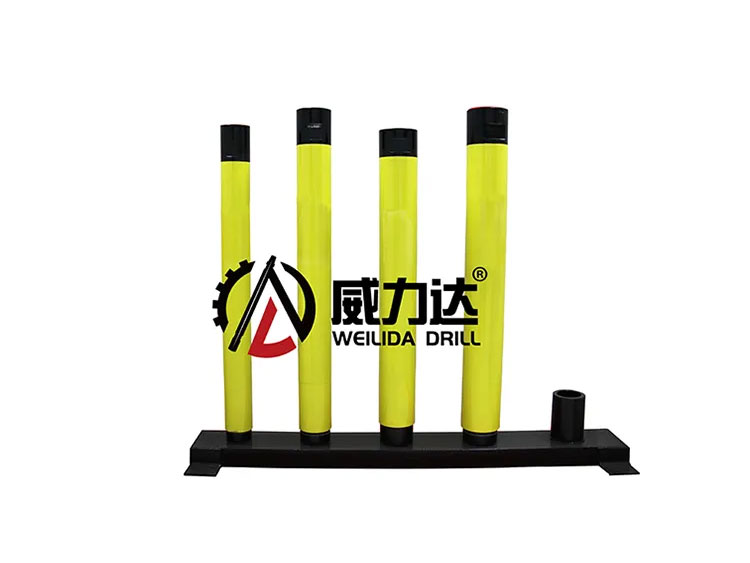
What Is a DTH Hammer? Definition and Basic Structure
A DTH hammer is a pneumatic drilling tool that uses compressed air to drive an internal piston, creating repeated impacts on the drill bit to break rock at the bottom of the borehole.
A typical DTH hammer consists of a hammer body, piston, cylinder, drill bit, chuck, and internal air passages. During operation, compressed air enters the hammer body and moves the piston forward and backward at high speed. The piston then transfers impact energy directly to the drill bit.
At the same time, exhaust air flows through the drill bit and removes broken rock particles from the borehole, helping maintain drilling efficiency and preventing excessive accumulation of cuttings.
The direct impact design makes DTH hammers especially suitable for hard formations such as granite, limestone, and basalt, where efficient rock-breaking performance is required.
How Does a DTH Hammer Work? Step-by-Step Process
The DTH hammer working principle involves compressed air supply, piston movement, impact transfer, and continuous removal of drilled rock particles.
The working process includes four main stages:
1. Compressed Air Supply
The drilling rig delivers high-pressure compressed air through the drill pipe into the DTH hammer. This compressed air provides the energy required to operate the internal piston mechanism.
2. Piston Impact Generation
Inside the hammer cylinder, compressed air moves the piston back and forth at high frequency. Each forward movement generates impact energy that is transferred directly to the drill bit.
3. Rock Breaking
The drill bit converts impact energy into mechanical force against the rock surface. Repeated impacts create fractures in the formation, allowing the drilling system to advance deeper.
4. Cuttings Removal
After each impact cycle, compressed air passes through the drill bit openings and carries rock fragments out of the borehole. This continuous cleaning process improves drilling speed and stability.
DTH Hammer vs Other Drilling Methods: Key Differences
DTH hammer drilling differs from conventional drilling methods because it delivers impact energy directly to the drill bit, improving efficiency and accuracy in hard rock applications.
| Feature | DTH Hammer Drilling | Rotary Drilling |
|---|
| Impact Location | Directly behind drill bit | Impact generated away from bit |
| Energy Transfer | Higher efficiency with less loss | More energy loss through transmission |
| Hard Rock Performance | Excellent for hard formations | Depends on rock conditions |
| Hole Accuracy | High straight-hole accuracy | Can vary by formation |
| Common Applications | Mining, water wells, quarrying | Soft to medium formations |
For projects requiring reliable rock penetration, selecting suitable drilling equipment is essential. Weilida Drill provides complete drilling solutions, including water well drill rig equipment designed for different geological conditions.
DTH Hammer Applications and How to Select the Right Model
DTH hammers are widely used in industries requiring efficient rock drilling, accurate boreholes, and reliable performance in challenging geological conditions.
DTH drilling technology is commonly applied in mining exploration, water well drilling, quarry blasting, geothermal projects, and foundation construction because it can maintain stable penetration performance in hard rock formations.
When selecting a DTH hammer, engineers should consider:
Rock hardness and geological conditions
Required hole diameter
Air pressure and compressor capacity
Drill pipe compatibility
Drilling depth requirements
The correct combination of hammer size, drill bit design, air pressure, and drilling equipment can significantly improve penetration rate, reduce tool wear, and lower overall drilling costs.
International standards from organizations such as the International Organization for Standardization (ISO) help industries establish consistent technical requirements and quality management practices for industrial equipment.
Weilida Drill also provides DTH drill pipe solutions designed to work with DTH drilling systems, helping customers achieve stable and efficient drilling performance.
Why Choose DTH Hammer Drilling for Hard Rock Applications?
DTH hammer drilling is preferred for hard rock applications because it provides direct impact energy, strong penetration capability, and consistent drilling performance.
Compared with traditional drilling methods, DTH systems provide better energy transfer efficiency, improved hole accuracy, and strong adaptability to deep drilling operations. The direct impact mechanism allows the hammer to maintain stable performance even when drilling through difficult geological formations.
These advantages make DTH hammers widely used in mining, quarrying, water well drilling, and other industries requiring dependable drilling results.
Safe drilling operations also require proper equipment selection, inspection, and operating procedures. Guidelines from organizations such as the Occupational Safety and Health Administration (OSHA) emphasize the importance of workplace safety practices when operating industrial equipment.
The International Association of Drilling Contractors (IADC) also provides industry resources and safety guidance that support more efficient and responsible drilling operations worldwide.
Conclusion
Understanding the DTH hammer working principle helps drilling contractors select the right equipment for efficient rock penetration. By using compressed air to drive an internal piston and transfer impact energy directly to the drill bit, DTH hammers provide excellent drilling performance in mining, water well, quarrying, and construction applications.
Compared with conventional drilling methods, DTH hammer systems offer advantages in drilling speed, hole accuracy, and adaptability to difficult geological conditions.
Choosing the correct hammer model, drill bit, compressor capacity, and supporting equipment is essential for improving productivity and reducing operating costs.
Weilida Drill provides reliable drilling solutions, including DTH hammers, drill pipes, and drilling equipment designed to meet different industrial requirements.
FAQ
What is the working principle of a DTH hammer?
A DTH hammer works by using compressed air to move an internal piston, which repeatedly impacts the drill bit and breaks rock at the bottom of the borehole.
What is the difference between DTH hammer and top hammer drilling?
A DTH hammer delivers impact energy directly behind the drill bit, while top hammer drilling transfers impact energy through the drill rod from the surface.
What types of rocks can a DTH hammer drill?
DTH hammers are suitable for hard rock formations including granite, limestone, basalt, and other challenging geological conditions.
What air pressure is required for a DTH hammer?
The required air pressure depends on hammer size, drilling depth, compressor capacity, and rock conditions. Industrial DTH systems usually require high-pressure compressed air.
What industries use DTH hammers?
DTH hammers are widely used in mining, water well drilling, quarrying, geothermal projects, and foundation construction.
Does Weilida Drill provide DTH hammer solutions?
Yes. Weilida Drill provides DTH hammers, DTH drill pipes, and complete drilling equipment solutions for mining, water well, and construction applications.
References
International Organization for Standardization (ISO)
https://www.iso.org/
Occupational Safety and Health Administration (OSHA)
https://www.osha.gov/
International Association of Drilling Contractors (IADC)
https://iadc.org/
 English


