Down-the-hole (DTH) drilling has become one of the most efficient methods for hard rock excavation, mining, quarrying, water well drilling, and construction projects. At the core of every DTH drilling system is the DTH drill pipe, a critical component responsible for transmitting compressed air, rotational force, and impact energy to the hammer and drill bit.
As drilling depths continue to increase and project efficiency requirements become more demanding, selecting the right DTH drill pipe can significantly improve penetration rates, reduce downtime, and lower overall drilling costs.
What Is a DTH Drill Pipe?
A DTH drill pipe is a high-strength steel tubular component used to connect the drill rig with the DTH hammer while transmitting compressed air and rotational torque during drilling operations. Unlike conventional drill rods, DTH drill pipes are specifically engineered to withstand high air pressure, severe vibration, and repeated impact loads encountered in rock drilling environments.
A typical DTH drill pipe consists of:
Pipe body
Tool joints
Thread connections
Friction-welded ends
Internal air passage
Modern DTH drill pipes commonly operate under air pressures ranging from 18 to 35 bar, while high-pressure drilling systems may exceed 40 bar. For deep-hole drilling projects, premium drill pipes can achieve service lives that are 30–50% longer than standard products.
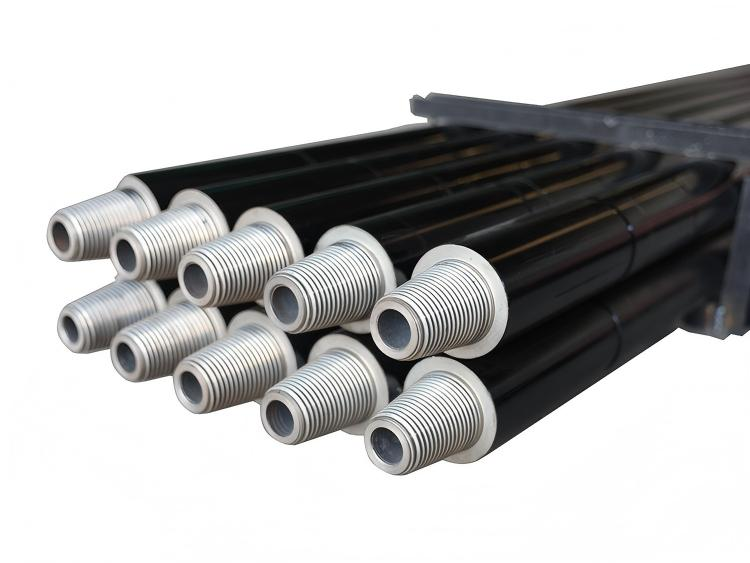
DTH Drill Pipe Structure and Key Specifications
The structure and specifications of a DTH drill pipe determine its drilling efficiency, durability, and compatibility with drilling equipment.
Common Specifications
| Parameter | Typical Range |
|---|
| Outer Diameter | 60 mm – 203 mm |
| Length | 1 m – 9 m |
| Thread Type | API REG, API IF, BECO |
| Material Grade | High-strength alloy steel |
| Air Pressure | 18–40+ bar |
| Application Depth | Up to 1,000+ meters |
Main Components
Pipe Body – Provides structural strength.
Tool Joint – Connects adjacent drill pipes.
Thread Connection – Ensures secure assembly.
Internal Bore – Delivers compressed air to the DTH hammer.
The friction-welding process used in premium drill pipes can increase connection strength by over 20% compared with traditional manufacturing methods.
DTH Drill Pipe vs Top Hammer Drill Rod
DTH drill pipes and top hammer drill rods are designed for different drilling mechanisms and rock conditions.
| Feature | DTH Drill Pipe | Top Hammer Drill Rod |
|---|
| Impact Source | Down-the-hole hammer | Surface rock drill |
| Energy Loss | Very Low | Higher |
| Hole Depth | Excellent | Moderate |
| Hole Straightness | Excellent | Good |
| Hard Rock Performance | Outstanding | Moderate |
| Operating Cost | Lower for deep holes | Lower for shallow holes |
| Typical Diameter | 90–400 mm | 38–127 mm |
For drilling depths exceeding 30 meters, DTH systems often achieve significantly higher efficiency because impact energy is generated directly behind the drill bit rather than being transmitted through the entire drill string.
According to industry reports from major drilling equipment manufacturers, DTH drilling can improve penetration rates by 15–40% in hard rock formations compared with conventional top hammer systems.
Applications of DTH Drill Pipes
DTH drill pipes are widely used in industries that require efficient drilling through hard and abrasive rock formations.
Mining Operations
Open-pit mines rely heavily on DTH drilling for blast hole creation. Hole diameters typically range from 90 mm to 250 mm.
Quarrying
Granite, limestone, and aggregate quarries use DTH drilling because of its accuracy and high productivity.
Water Well Drilling
Deep water wells often require DTH drill pipes due to their ability to maintain straight holes in challenging geological conditions.
Construction and Foundation Projects
Large infrastructure projects use DTH drilling for:
Oil and Gas Exploration Support
Certain specialized drilling projects employ DTH systems for pre-drilling and auxiliary applications.
How to Choose the Right DTH Drill Pipe
Selecting the proper DTH drill pipe requires evaluating drilling depth, rock hardness, air pressure, and equipment compatibility.
Several factors should be considered:
Drilling Depth
Longer and thicker drill pipes generally provide better stability for deep-hole applications.
Air Compressor Capacity
Insufficient airflow can reduce hammer efficiency and drilling speed.
Thread Compatibility
Common thread standards include:
Selecting incorrect thread types may result in equipment damage or air leakage.
Material Quality
Premium alloy steel drill pipes typically offer:
Manufacturer Reliability
Choosing experienced suppliers helps ensure:
As a professional drilling tools manufacturer, Weilida Drill provides customized DTH drill pipes designed for mining, quarrying, water well, and construction projects worldwide.
Maintenance Tips to Extend DTH Drill Pipe Service Life
Proper maintenance can significantly increase the operational lifespan of DTH drill pipes while reducing replacement costs.
Regular maintenance should include:
Cleaning threads after every drilling shift
Applying thread grease before assembly
Inspecting weld areas for cracks
Checking pipe straightness regularly
Avoiding excessive torque during operation
Industry data shows that proper thread lubrication alone can increase connection lifespan by approximately 25–35%.
Conclusion
DTH drill pipes play a critical role in maximizing drilling efficiency, maintaining hole accuracy, and ensuring long-term operational reliability. Whether used in mining, quarrying, water well drilling, or construction projects, selecting the appropriate drill pipe can directly influence productivity and operating costs.
By understanding pipe specifications, thread standards, material quality, and maintenance requirements, contractors can significantly improve drilling performance and equipment lifespan. As an experienced drilling tools manufacturer, Weilida offers reliable DTH drill pipe solutions tailored to demanding drilling environments around the world.
Frequently Asked Questions (FAQ)
1. What is the purpose of a DTH drill pipe?
A DTH drill pipe transfers compressed air and rotational force from the drilling rig to the DTH hammer and drill bit.
2. What material is commonly used for DTH drill pipes?
Most high-quality DTH drill pipes are manufactured from heat-treated alloy steel for superior strength and wear resistance.
3. How long does a DTH drill pipe last?
Service life varies depending on drilling conditions, maintenance practices, and material quality, but premium drill pipes can operate for thousands of drilling hours.
4. What thread types are available for DTH drill pipes?
Common thread types include API REG, API IF, and BECO threads.
5. Can DTH drill pipes be used for water well drilling?
Yes. DTH drilling is one of the most popular methods for deep water well drilling due to its accuracy and efficiency.
6. How do I select the correct drill pipe diameter?
The diameter should match the hammer size, drilling depth, compressor capacity, and target hole diameter.
 English


