Drilling water wells efficiently is a critical task in many industries, and using the right equipment is key to achieving fast, reliable results. A well-designed DTH drill rig can dramatically improve productivity, reduce downtime, and handle challenging ground conditions with greater ease. When deploying a rig like those offered on the Weilida water well drill rig-product line, operators benefit from advanced feed systems, solid structure, and optimized drilling processes.
Enhanced Performance with the DTH Drilling Machine
A modern dth drilling machine delivers enhanced performance by integrating robust feed mechanisms, high-impact hammers, and optimized controls that allow for faster penetration rates and more consistent borehole results. When drilling deep water wells, encountering hard rock, fractured formations or mixed geology, the ability of a dth rig to maintain steady air pressure, deliver sustained percussion through the hammer, and forcefully eject cuttings becomes a major advantage. Weilida's rigs, for example, include compact but strong structures with hydraulic feeding systems that reduce manual effort and increase operational reliability. The centralised control layout means the operator can monitor key parameters such as feed force and bit torque in-real-time, ensuring drilling proceeds uninterrupted. Because the machine optimizes each phase of the drilling cycle—from bit impact to rod extraction—the total time to reach target depth is significantly reduced.
How Can a DTH Drilling Machine Adapt to Variable Well Conditions?
One of the core strengths of the DTH drill rig is its adaptability to changing geological and operational conditions common in water well projects. Many rigs are equipped with reversible drill chucks, ball-clamping mechanisms, and dual-mode feed systems that allow drilling through sedimentary layers, fractured rock, or bedrock. For a rig to deliver such versatility, the design platform must be flexible and responsive. Weilida's models incorporate feed systems that adjust to the load automatically, meaning when the formation hardens the feed slows just enough to maintain hammer efficiency without over-loading components. Operators marking transitions in formation need minimal downtime thanks to hydraulic controls and modular components. Moreover, the ability to mount the rig on a compact chassis with water-pump integration allows fast mobilization in both flat and mountainous terrain, further reducing non-productive time and increasing site coverage per unit.
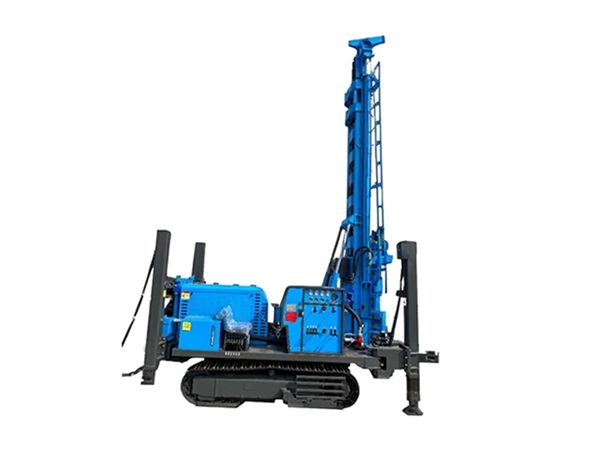
Integrating the DTH Drilling Machine into Well-Drilling Project Workflows
Deploying a dth drilling machine effectively requires more than just the rig itself; it involves aligning the machine with workflow tasks such as casing installation, slurry handling, and bit management. In a water-well context, the rig must support smooth transition between drilling and casing installation, often in tight schedules. Weilida rigs support feed reversal and fast rod handling, which shortens the time between drilling phases. Because the rig is designed to manage high volumes of air or fluid displacement, cuttings removal and borehole cleaning occur more rapidly, thereby reducing the risk of downtime due to stuck rods or bit failure. The result is a streamlined workflow where the dth drilling rig becomes the backbone of the project, enabling crews to move from one well to another with minimal delays. Over a water-well drilling campaign, this compounding efficiency can translate into fewer days per well, higher borehole throughput, and better overall project economics.
What Operational Best Practices Improve DTH Drilling Machine Efficiency?
Achieving top performance from a dth drilling machine requires adherence to operational best practices that support the machine's design capabilities. First, proper air-supply management ensures that the hammer receives correct pressure and flow; a decline in air performance drastically slows penetration rate. Second, routine monitoring of bit condition, hammer wear, and drill-rod thread integrity helps prevent premature component failure. Weilida's rigs benefit from their design simplicity, making maintenance tasks quicker and simpler, thus minimizing downtime. Third, real-time feed-force control helps maintain optimal drilling loads—too much force stalls the hammer, too little reduces efficiency. Finally, systems that allow for fast mobilization—such as compact baseframes and integrated power packs—ensure the rig spends minimal time in transit or setup, increasing the productive drilling window.
Long-Term Benefits of Using a DTH Drilling Machine for Water Wells
Over the lifetime of a water-well drilling program, the adoption of a well-engineered dth drilling machine yields multiple long-term benefits. These include higher daily meters drilled, more reliable results in complex ground, reduced risk of stuck tools or borehole collapse, and faster project turnaround. Weilida's rigs support those outcomes through features such as hydraulic feed, compact layout, and versatile transportability, making them suitable for both remote sites and dense wellfields. For operators looking to maximize water-well drilling efficiency, the dth drilling machine is not just a tool—it becomes a strategic asset that enables scale, repeatability and reliability across campaigns.
Partner with Weilida in Water Well Drill Rig Solutions
Partner with Weilida to maximize efficiency and reliability in water well drilling with our advanced water well drill rig solutions. Drawing on over three decades of engineering excellence, Weilida designs and manufactures drill rigs — including DTH and rotary water well rigs — that deliver robust performance in varied geological conditions. Our equipment is engineered for precision, durability, and ease of operation, helping drilling contractors achieve faster penetration rates, cleaner boreholes, and reduced operational costs across water well projects.
At Weilida, we integrate rigorous quality control with customizable configurations, ensuring each water well drill rig meets your specific project needs and site challenges. Supported by ISO9001 quality standards and global service capabilities, our rigs are trusted by professionals seeking dependable performance and long-term value. Let us help you elevate your water well drilling operations — contact Weilida today for tailored recommendations and partnership options.
FAQs
Q1: What is the drilling rig?
A drilling rig is an integrated system that drills wells, such as oil or water wells, or holes for piling and other construction purposes, into the earth's subsurface
Q2: How does a drill rig work?
A rotary drill rig uses an assortment of bits. The most common types are long cable bits or interlocking steel bits – both which rotate in a clockwise direction to bore into the earth and loosen the soil. Rock is carried to the surface as the bit turns.
Q3: How deep can a drill rig drill?
These offshore rigs operate in waters up to 400 feet deep and can drill up to 30,000 to 35,000 feet beneath the seabed. The most commonly used type of rigs, they feature long, movable legs that are lowered to the ocean floor while the platform is raised above the water surface and the waves.
Q4: What's the difference between a service rig and a drilling rig?
Service rigs are much smaller than drilling rigs and they are fully mobile. Where a drilling rig requires trucks to move its various pieces, a service rig's equipment is on wheels, and can be driven from location to location.
 English


